
Concrete Pad vs. Slab: Which Is Right for Your Benbrook Project?
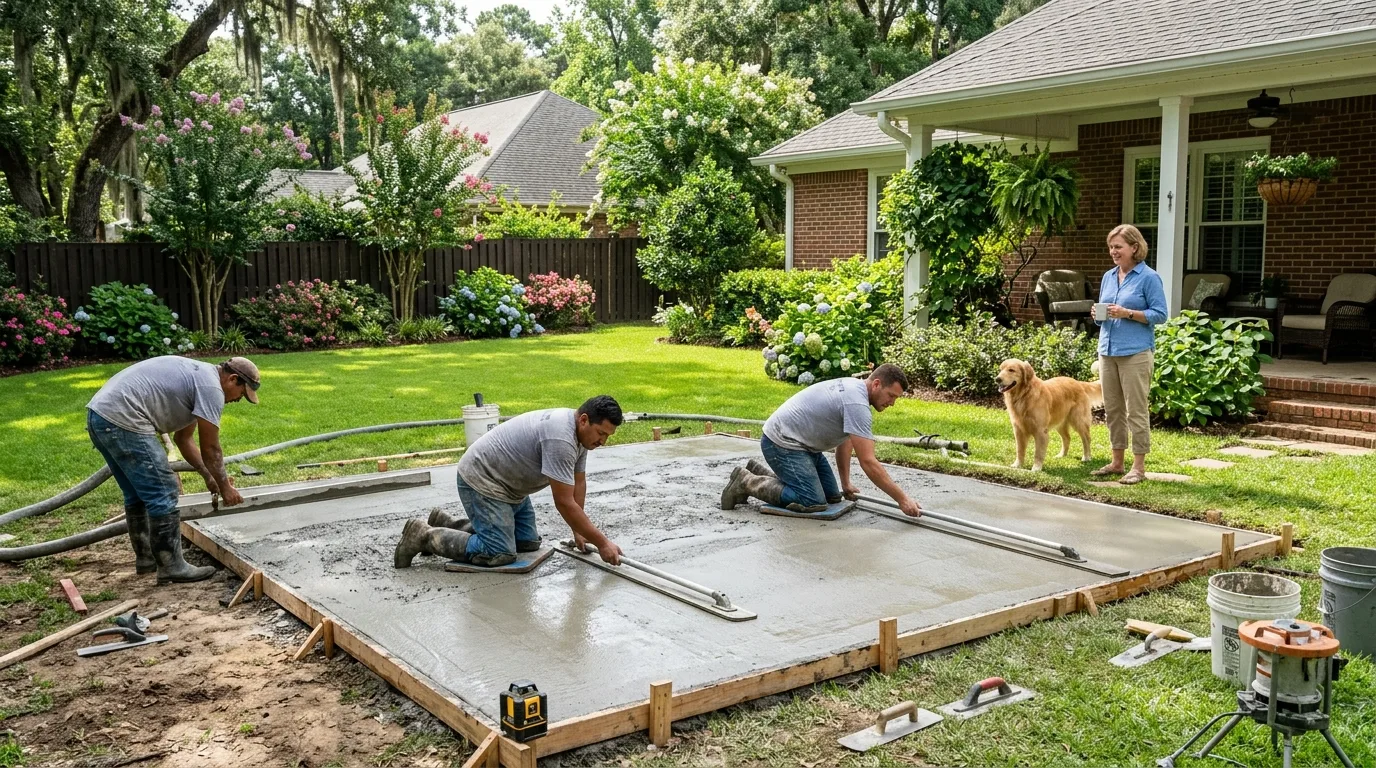
“Concrete pad” and “concrete slab” are sometimes used interchangeably — and sometimes they mean different things depending on who you’re talking to. For Benbrook homeowners comparing bids or planning a project, understanding the distinction helps you verify that every contractor you’re talking to is proposing the same product. The terms differ in intended use, thickness, reinforcement, and base preparation requirements — and in Benbrook’s clay soil, getting those specs right determines whether the concrete lasts a decade or several.
Get the Right Concrete Spec for Your Benbrook Project
We'll walk you through which specification fits your use case. Call (888) 376-0955 for a free estimate.
How the Terms Are Used in Benbrook
In common North Texas contractor usage:
Concrete pad typically refers to a smaller, freestanding concrete surface used as a base for a specific structure or purpose — a shed foundation, an HVAC equipment pad, a garbage can pad, a small workshop base, or a deck support surface. Pads are often 4 inches thick with minimal reinforcement since they’re designed for modest loads.
Concrete slab typically refers to a larger, structural concrete floor surface — a garage floor, a workshop foundation, a home addition foundation, or a large flatwork area. Slabs are designed for sustained structural loads, vehicle use, or to serve as the foundation for a permanent structure.
The distinction matters because Benbrook’s permit requirements and construction specs differ. A small shed pad under 120 square feet may be permit-exempt in Benbrook; a garage slab requires a permit. A shed pad at 4 inches with wire mesh may be adequate; a garage slab for two vehicles needs 5+ inches with rebar.
When a Concrete Pad Is Appropriate
Concrete pads are the right choice for:
HVAC equipment bases: The standard HVAC condensing unit pad is a pre-formed concrete pad or a small poured slab — typically 24 × 24 inches. These don’t require permits and use minimal material. The purpose is to elevate equipment above grade, provide a stable level surface, and prevent equipment contact with soil moisture.
Shed foundations under 120 SF: Benbrook allows accessory structures under 120 square feet without a permit. The concrete pad for a small shed or storage structure in this size range can be a simple 4-inch pour with wire mesh — adequate for the light load.
Outdoor equipment pads: Generator pads, pool equipment bases, garbage can areas — all qualify as pads and don’t require the structural spec of a full slab.
Deck support footings: Individual concrete footings (not full slabs) for wood deck support posts are pads — small diameter, deeper pours below frost depth.
When a pad isn’t enough: Even a “pad” in Benbrook’s clay soil needs a gravel base layer. Pouring directly on clay — even for a small pad — puts the concrete in direct contact with soil that moves seasonally. The small size of a pad means less area to distribute movement stress, which means proportionally more cracking risk without a base layer.
Not Sure Which Spec Your Benbrook Project Needs?
We'll give you an honest recommendation. Free estimates — call (888) 376-0955.
When a Concrete Slab Is Required
Concrete slabs are the appropriate specification for:
Garage floors: Two-car garage slabs in Benbrook should be 5 inches minimum for vehicles, with rebar (#3 on 18-inch centers), compacted gravel base (4–6 inches), and a smooth trowel finish. Homes in Westpark Estates and North Benbrook with detached garages need full slab specification, not pad specification.
Workshop and utility building foundations: Any permanent structure intended to hold significant weight — workshop tools, stored vehicles, hay or equipment storage — needs full slab specification with reinforcement appropriate to the anticipated load.
Large storage structures: Buildings over 120 square feet require permits in Benbrook — and with the permit comes the requirement to build to code. The foundation slab for a permitted structure must meet Benbrook’s building code reinforcement requirements.
Basement or crawlspace slabs: Any structural floor associated with a home addition needs structural engineering oversight and full slab specification.
RV and boat storage pads at scale: What’s called a “pad” for RV or boat storage is actually a slab in terms of performance requirements — RV and boat trailers exert point loads at the tire contact areas that require 5–6 inch concrete with rebar to resist cracking.
Spec Comparison for Benbrook’s Clay Soil
| Element | Simple Pad | Residential Slab | Heavy-Load Slab |
|---|---|---|---|
| Thickness | 3–4 in | 4–5 in | 5–8 in |
| Reinforcement | Wire mesh | #3 rebar, 18 in | #4 rebar, 18 in |
| Base depth | 2–4 in | 4–6 in | 6–8 in |
| Concrete PSI | 3,000 | 3,500 | 4,000+ |
| Permit (Benbrook) | Often exempt | Required | Required |
All three categories benefit from gravel base in Benbrook’s clay soil — even the simple pad. The clay soil movement in Tarrant County affects small concrete structures as readily as large ones.
Cost Comparison in Benbrook
Simple concrete pad (small HVAC or shed pad):
- $200–$800 depending on size and site conditions
Standard residential slab (garage floor, workshop):
- $6–$10/SF — a 480 SF two-car garage slab runs $2,880–$4,800
Heavy-load slab (commercial, RV, heavy equipment):
- $9–$14/SF depending on thickness and reinforcement requirements
The cost difference between a “minimum pad” and a properly specified slab in Benbrook is meaningful — but so is the performance difference on clay soil. A garage floor poured at minimum spec on clay without proper base typically shows cracking within 5 years under vehicle loads. A properly built slab lasts 40+ years in the same conditions.
Permit Requirements in Benbrook for Pads and Slabs
Permit-exempt (likely): Concrete pads for structures under 120 square feet, HVAC equipment pads, isolated footings. Must still comply with setback requirements.
Permit required: Garage slabs, workshop and storage building foundations over 120 SF, any concrete adjacent to or attached to a structure. Residential permit review takes 10 business days in Benbrook.
When in doubt, contact Benbrook Building Inspections at 817-249-6064 before work begins. An unpermitted slab that should have required a permit creates disclosure and remediation issues when you sell the property.
Practical Uses
Detached garage in Trinity Estates: Full slab specification — 5-inch minimum, rebar, compacted base, smooth trowel finish. Permit required. See our concrete slab service page for the complete process.
HVAC pad replacement in Benbrook Lakeside: Simple pad with gravel base — no permit needed for standard replacement. Four to 6 inch pour with wire mesh is adequate for equipment base use.
Shop building in North Benbrook: Shop building over 120 SF requires permit. Full slab spec with reinforcement per the building’s structural load requirements. Concrete flooring for workshop use typically benefits from 5-inch slab minimum to handle tool and equipment storage loads.
Small shed base in Hilltop Heights: Under 120 SF? Permit-exempt in Benbrook but setbacks still apply. Four-inch slab with gravel base minimum — don’t go thinner on clay soil even for small structures.
RV storage pad: Despite the word “pad,” a surface for RV storage is a slab in performance terms. Five-inch minimum, rebar, proper base. Worth doing right the first time given the load involved.
Frequently Asked Questions
What’s the difference between a concrete pad and a slab in Benbrook?
“Pad” typically refers to a smaller, lighter-use concrete surface for equipment or small structures; “slab” refers to a structural floor for garages, workshops, or buildings. In Benbrook’s permitting context, the distinction matters — structures under 120 SF with their pads are often exempt from permits, while garage and workshop slabs require permits. Both need gravel base on Benbrook’s clay soil. See our full concrete slab service page for specification details.
Do I need a permit for a concrete pad in Benbrook?
Small concrete pads for structures under 120 square feet, HVAC equipment, or other exempt uses typically don’t require a permit in Benbrook. However, any concrete adjacent to or attached to a structure, or serving as the foundation for a building over 120 SF, usually requires a permit. Contact Benbrook Building Inspections at 817-249-6064 to confirm for your specific project. See our permit guide for Benbrook for complete coverage.
How much does a concrete slab cost vs. a pad in Benbrook?
A simple concrete pad (HVAC unit, small shed) runs $200–$800 depending on size. A residential slab (garage, workshop) runs $6–$10/SF — a 480 SF two-car garage slab costs $2,880–$4,800. See our Benbrook concrete cost guide for full pricing on all concrete types.
Get the Right Concrete for Your Benbrook Project
Pads, slabs, or garage floors — we spec every project correctly for Tarrant County clay soil. Call (888) 376-0955.
Related: